AC Milan’s
2015-16 season has been in keeping with those that have passed recently
before it. Drama and chaos regularly consume the club with a
consistency that is, sadly, only matched by their perpetual ability to
disappoint in the league standings of late.
 The playing staff turnover has matched the managerial one; the number
of ins and outs each summer at San Siro is positively dizzying, with
hoards of average players hauled in and turfed out at every opportunity.
The playing staff turnover has matched the managerial one; the number
of ins and outs each summer at San Siro is positively dizzying, with
hoards of average players hauled in and turfed out at every opportunity.There was once a feeling that Milan’s squad was strong but the manager was not getting the best out of them, but now the situation is reversed: The club must employ a man who can elevate a disappointing team to higher levels.
Some of the current first-team staples—Riccardo Montolivo, Juraj Kucka, Andrea Bertolacci, Ignazio Abate and so on—are not UEFA Champions League-calibre players. Milan’s position of sixth in Serie A, eight points off third place, is about right when you compare their squad to those above them.
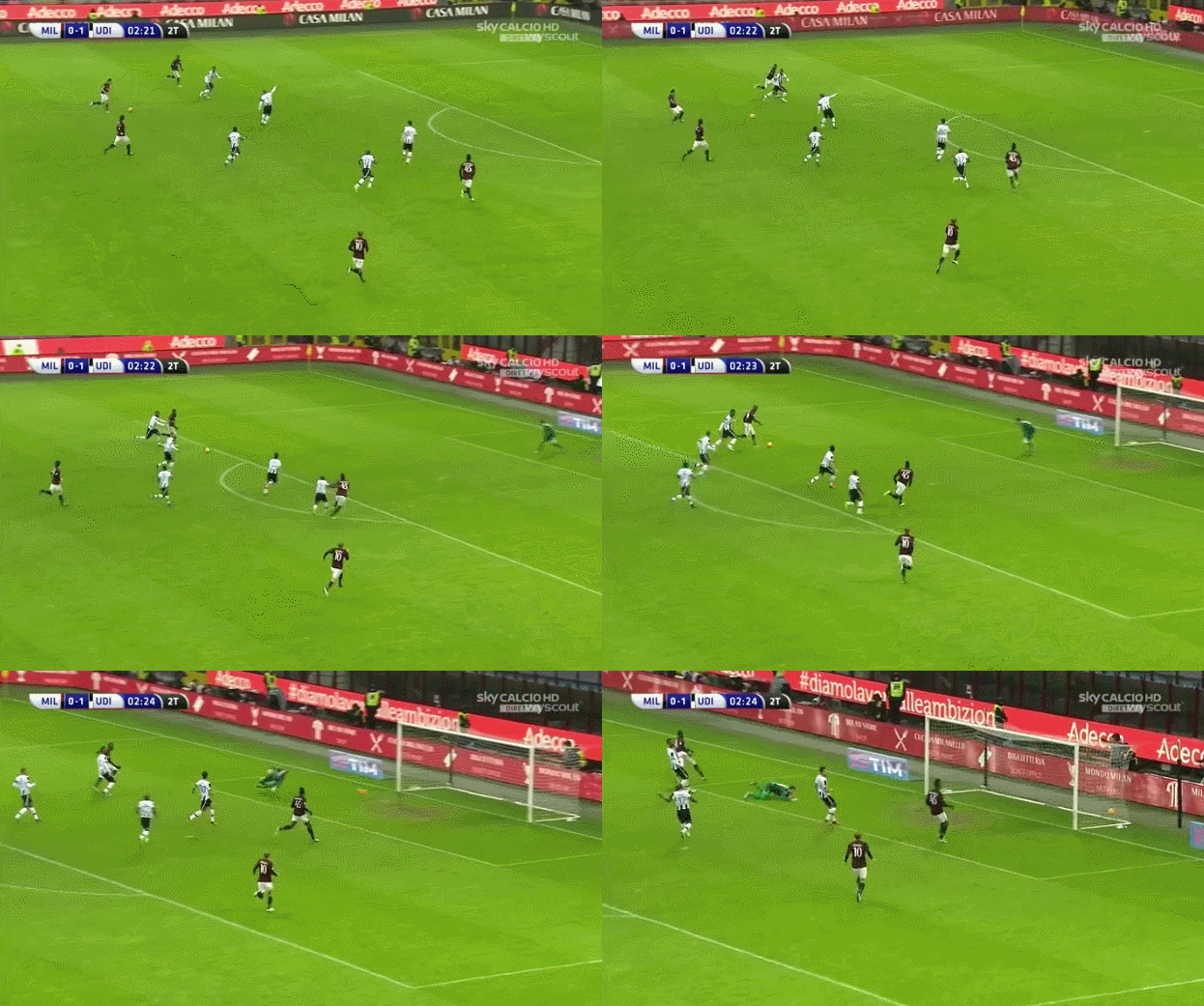
Credit: Sky Calcio
It gives them a glimmer of hope moving forward. Amid the constant churn of personnel, one who had previously been deemed a failure has come back to provide an extremely positive influence.
It took until November 29, 2015, for Niang to score his first Serie A goal for Milan. Granted, he’d been out on loan to Montpellier and Genoa for lengthy chunks between that date and signing in 2012, but it had still been a long time coming.
Allegri threw him in at the deep end early on, with Niang starting the 4-0 loss to Barcelona at Camp Nou in 2013 and being withdrawn after 60 minutes. On that night, the nerves and the occasion got to him, cutting a very lonely figure as a sole centre-forward in a team who rarely attacked. “Supported” by the equally erratic Stephan El Shaarawy and Kevin Prince-Boateng, the ball never stuck and Milan never kicked on offensively.
The confident, cocky Niang we saw at Caen—the one who enjoyed a private dinner with vice-president Adriano Galliani as a precursor to signing at San Siro—vanished soon after that night. Post-Allegri, he failed to break into the XI, and the two loan spells produced mixed results. The fact he hadn’t scored for the club yet became a continental joke.
Under Mihajlovic, though, that cockiness and self-assuredness has returned, and he’s been one of Milan’s brightest sparks in 2015-16. Giacomo Bonaventura may be the creative fulcrum of the side and Carlos Bacca the “star,” but Niang has emerged as a key part of the Rossoneri’s re-emergence as a footballing side.
 It took Mihaljovic a little while to work out how he wished for his
Milan side to line up, but in November he struck gold with a flat
4-4-2. There was once a time when that would have been frowned upon, but
in 2016—a year when Atletico Madrid, Leicester City, Manchester City, Juventus and Villarreal use it to varying degrees—it’s an acceptable time to go “back to basics.”
It took Mihaljovic a little while to work out how he wished for his
Milan side to line up, but in November he struck gold with a flat
4-4-2. There was once a time when that would have been frowned upon, but
in 2016—a year when Atletico Madrid, Leicester City, Manchester City, Juventus and Villarreal use it to varying degrees—it’s an acceptable time to go “back to basics.”There are weaknesses and holes in Milan’s 4-4-2, no doubt. Central midfield needs a rather sizable upgrade, full-back is a problem and only one of the wing slots is nailed down. What has blossomed, though, is Bacca and Niang’s strike partnership, and they look extremely comfortable playing alongside one another in a “2.”
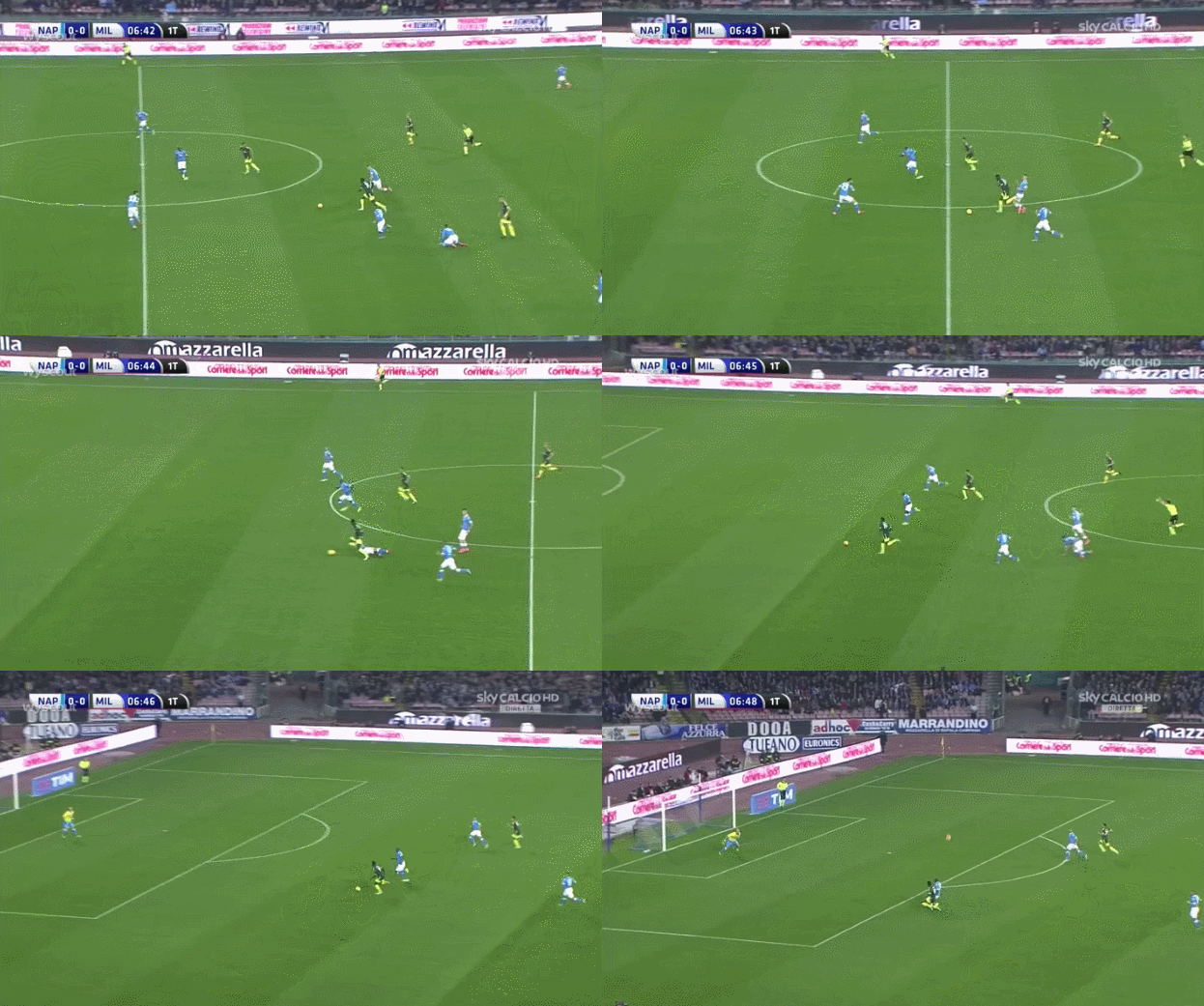
Niang is an incredibly quick player, and the 4-4-2 unlocks that attribute with regularity. He’s allowed to spear forward with the ball at his feet and dribble into dangerous areas. Aside from long balls forward it’s the fastest way to get the ball from back to front, as Milan’s midfield—particularly Montolivo—is obscenely slow across the ground.
The Rossoneri do not dominate possession regularly and quite often find themselves in reactive mode—another boon for Niang. He works hard to close down ball-players and, if possible, spark counters that start high up. Again, his speed across the ground and sheer directness of running causes a lot of problems for opponents; if he nicks the ball off you, he’s heading straight for the channel.
Technically he’s at a high level, and as his confidence has grown, the swagger has re-entered his style of play. The way he takes penalties exudes self-belief, and it harks back to his Caen days, when he’d beat players by doing keepy-ups around them and bursting free.

Part of the issue is that at times he bursts forward so quickly he can’t slow himself down and go through the regular motions of placing a shot. The other part, perhaps, is that because he’s still so instinctive and raw, he hasn’t quite thought through how to finish off his move.
There are signs a true goalscoring predator in him, though. Look at the way he takes a touch when controlling balls into his path six yards out—very few other strikers have the poise and calmness to do it; most would lash it first time and hope it nestles. He takes up great positions—particularly when playing one-twos with Bacca in the opposing third—and understands how to run the channels very, very well for a 21-year-old.
